In this article
When someone nearby searches "dentist near me" or "dentist [suburb]", Google usually shows a map with three practices before any normal results. Those three practices get most of the calls. Getting into them is what local SEO for dentists mostly comes down to, and it works differently from ranking a website.
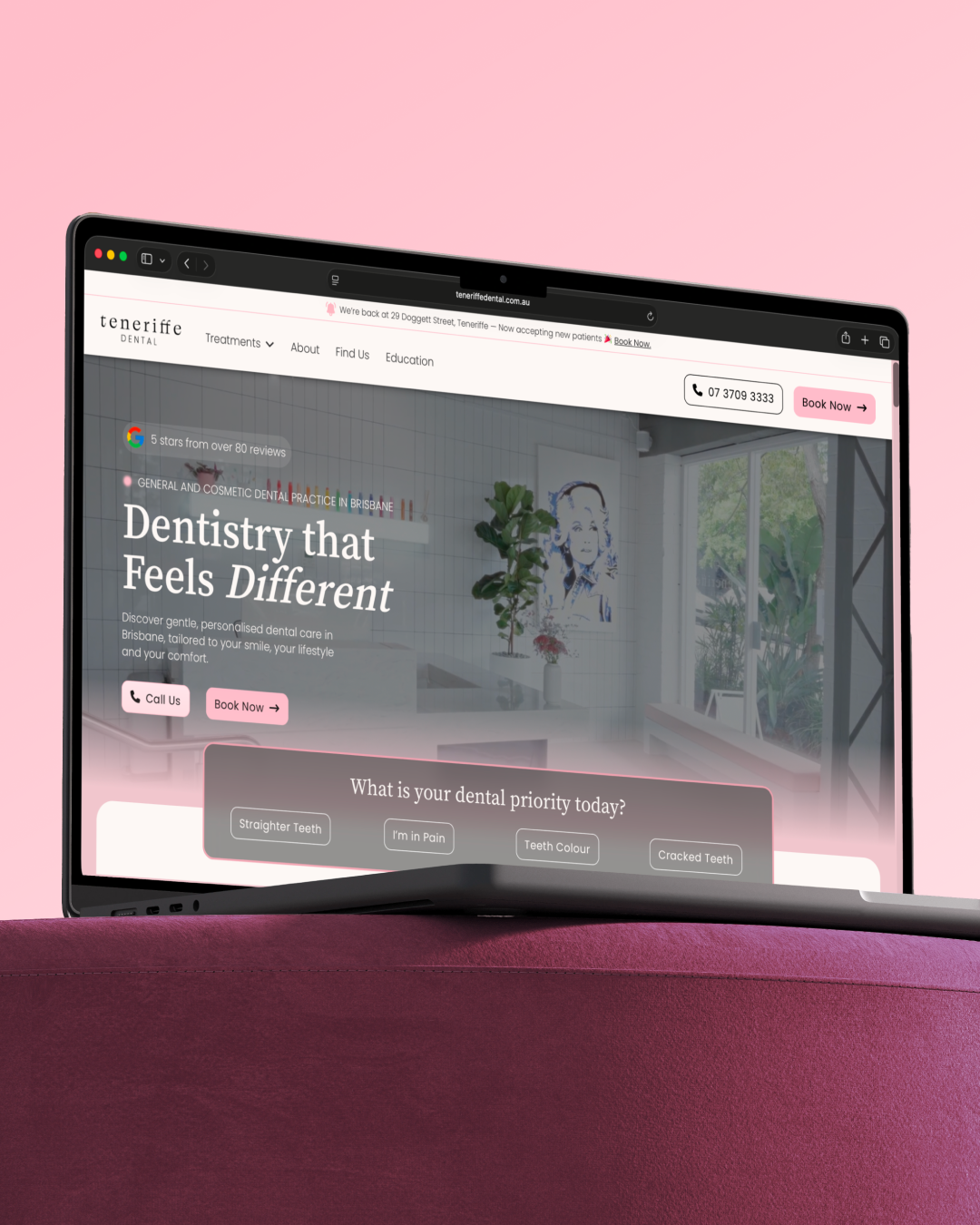
This is the approach we use for the dental practices we work with, including Teneriffe Dental in Brisbane. It is written for practice owners and managers, not marketers.
How Google picks the three practices in the map pack
Google says local results are based on three things: relevance, distance and prominence.
- Relevance: how well your profile and website match what was searched. A practice that lists emergency appointments as a service has a better chance at "emergency dentist" searches.
- Distance: how far you are from the person searching, or from the suburb in the search. You cannot change this one.
- Prominence: how well known the practice is, online and off. Reviews, links, directory listings and the strength of your website all feed into it.
Distance is fixed, so the work goes into relevance and prominence.
Set up your Google Business Profile properly
The Business Profile is the biggest single lever. Most practices we audit have one, but it was set up once, years ago, and never touched again.
Categories
Your primary category should be Dentist. Add secondary categories only where they are true for the practice, such as Cosmetic dentist. Do not add a specialist category unless a practitioner holds that specialist registration. It misleads patients and it is an AHPRA problem.
Services and treatments
List every treatment you want to be found for, in the words patients use. "Composite bonding" and "chipped tooth repair" are both worth listing if you offer them.
Photos of your actual practice
Upload photos of your rooms, your team and the outside of the building, and keep adding new ones. Patients choosing a dentist want to see where they are going, and recent photos show Google and patients that the practice is active.
Weekly posts
Post once a week: a treatment explainer, a team introduction, practice news. Posts count as advertising, so the same AHPRA rules apply. No "best", and no promised outcomes.
Reviews: get more of them, the right way
Your review count, rating and how recent your reviews are all count towards prominence, and they are the first thing patients read. The practices that hold a map pack spot usually ask every patient, every time, with a link sent by SMS or email after the appointment.
Two rules to keep in mind. Google does not allow incentives for reviews, so never offer anything in exchange for one. And AHPRA restricts how testimonials can be used in advertising, so do not quote or repost reviews that talk about clinical outcomes. Check AHPRA's current guidance before building reviews into your marketing.
Treatment pages and suburb pages
The map pack leans on your website as well. Google reads your site to judge relevance, so each treatment you want more of needs its own page: what it involves, who it suits, how fees work, and how to book.
Suburb pages can help a practice that draws patients from several areas, but only when each page says something specific about that suburb. Ten copies of the same page with the suburb name swapped will not help, and can hurt. Three good pages beat twenty thin ones.
Citations: the directories that matter
A citation is any listing of your practice's name, address and phone number on another website. Consistency matters more than volume. Use exactly the same name, address and phone everywhere, matching your Business Profile.
For dental, start with the health directories patients actually use, such as Healthdirect, then the major general listings: Apple Business Connect, Bing Places and Yellow Pages.
What to expect, and when
The Business Profile usually responds first, once categories, services and photos are fixed and reviews are coming in steadily. Website pages take longer. Three to six months is typical before new treatment pages rank well for competitive terms. We give practices the honest timeline on the first call, not an optimistic one.
For the wider picture, including Google Ads and tracking enquiries through to booked patients, see how we work with dental practices.

Daniel Edwards
Co-founder
Daniel co-founded Uno Digital and runs SEO, Google Ads and CRM work for Brisbane businesses, including Teneriffe Dental. He builds the tracking that ties marketing to enquiries and booked work.
- Google Ads
- Technical SEO
- Local SEO
- Zoho CRM