In this article
Your next buyer is scrolling Instagram right now. In a Savvy survey of 1,000 Australians, 46% of 18 to 24 year olds said they would use social media to research their next car. The buyers coming through in the next decade start their search on a feed, not on Car Sales.
Most dealerships meet that buyer by paying. You list every car on the marketplaces, pay per listing or per lead, and run ads to push stock in front of people. You rent every one of those buyers, and the rent keeps going up.
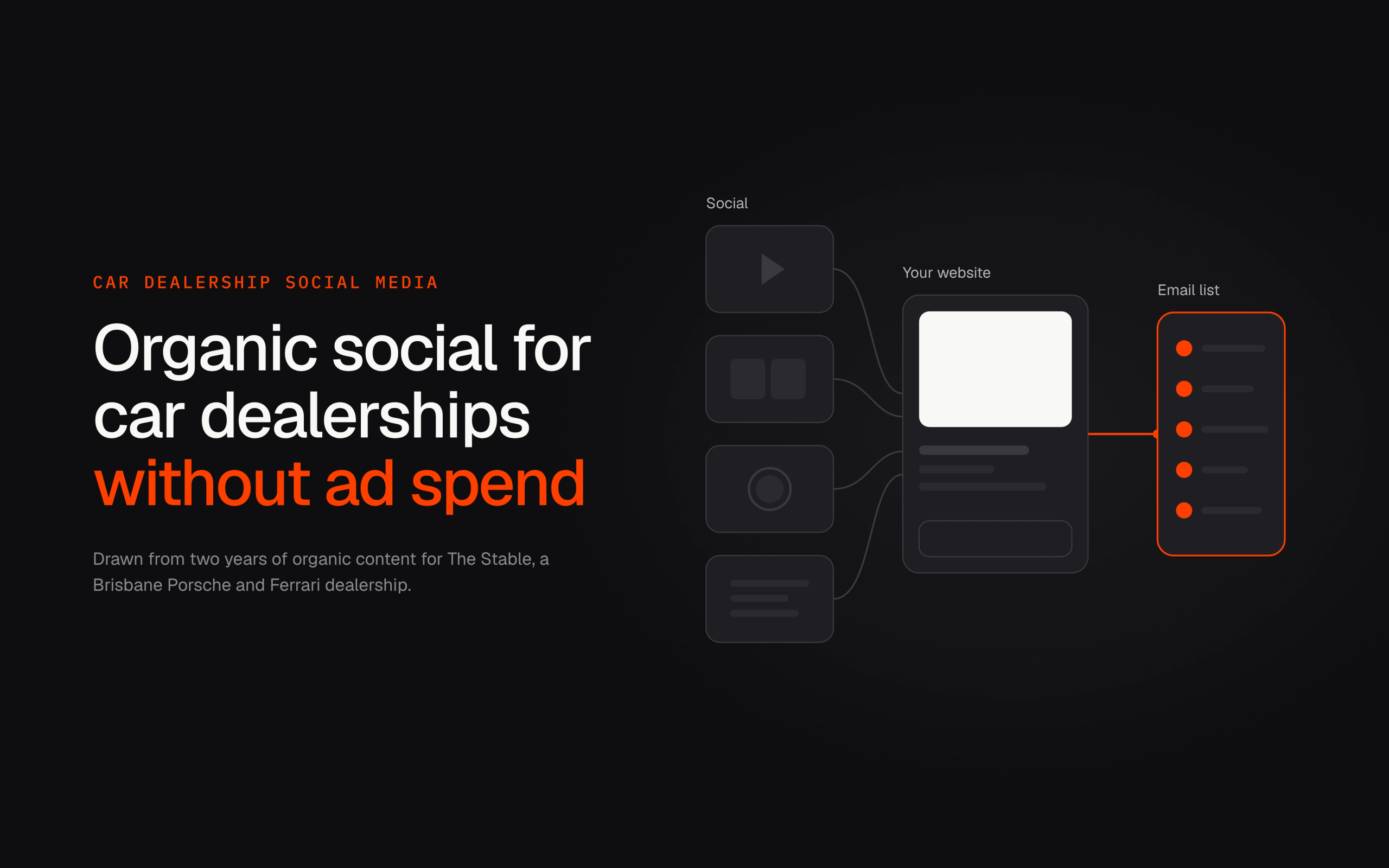
Organic social gives you a second route. You build an audience of people who want the kind of cars you sell, then put new stock in front of them the day it lands, without paying a platform for the privilege. Turn that audience into an email list and you own it outright.
We wrote this for independent and boutique dealers, where the owner controls the socials and every car is a little different. Franchise dealers work inside OEM brand rules and often have manufacturer co-op budgets, so parts of this will land differently for you.
What no longer works
Most dealerships that continually see poor performance through social media usually stick to this format.
- Listing photos plus a price: The classic four angles and an interior photo from the yard. Buyers can already see that on the marketplaces, so they have no reason to follow you for it.
- Chasing reach with hashtags: Usually hashtags are a symptom of old, now outdated, strategies. Hashtags reach a global audience looking for your keywords, not your target audience.
- Posting a car after it's sat: If a car reaches your feed three weeks after it hit the marketplaces, your followers only ever see the leftovers and know they'll have better luck refreshing Car Sales.
The platforms reward content people stop for, save and send to a friend. Everything below builds toward that.
1. Go beyond the listing
People follow a dealership for content they can't get on a marketplace. Your listing photos tell a buyer what the car is. Your social content needs to show them why they'd want it.
Build socials into the shoot you already do
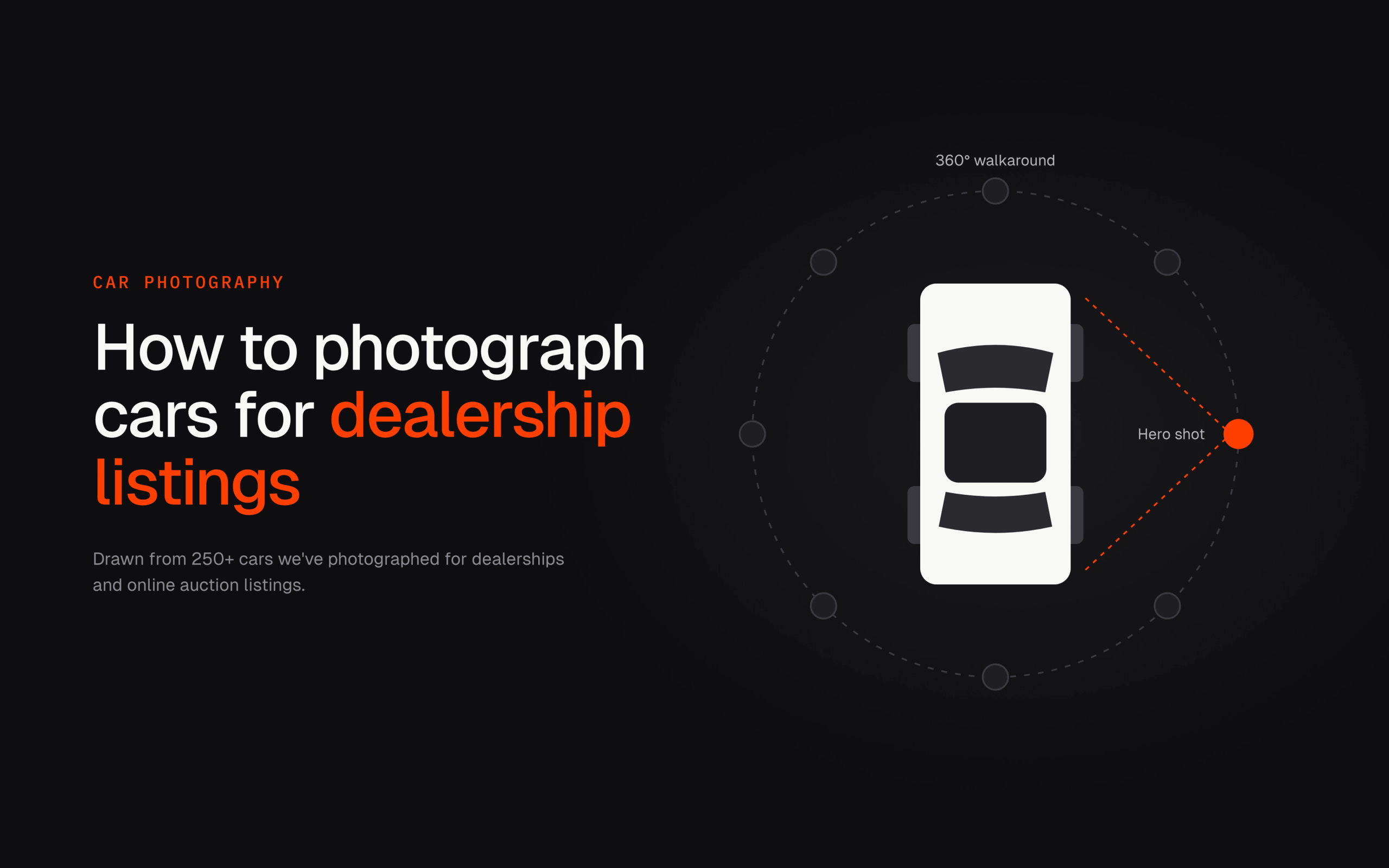
You already photograph every car for the marketplace listing. Add the social versions to that same session: a set of portrait-orientation shots and a short video. Any photographer can extend a listing shoot this way, and it gives you purpose-made social content without a second trip or a second booking. If your listing photos need work first, start with our guide on how to photograph cars for your listings.
Get out of the dealership
The boutique dealers who stand out shoot their cars on location. Content shot only in the yard or the showroom has been done to death, and unless you execute it exceptionally well with a beautiful location and amazing content, people scroll past. Pick spots 15 to 30 minutes away that suit the buyer you want: a laneway, an underpass, a brick wall, a café strip, a lookout. You're selling the life the car fits into and how the buyer can imagine themselves in it, so show it.
Template YOUR look
Create a template for every new arrival, so each car gets the same treatment: one photo carousel and one video, shot with the same composition, lighting, framing and edit. Followers start to recognise your posts before they see your name.
We built exactly this for The Stable, a boutique Porsche and Ferrari dealership in Brisbane. Every car got a high-quality photo set shot around Newstead and Teneriffe, following the same rules for composition, light and editing. That consistency became recognised as the Stable look. Over two years it drove their growth as their core marketing channel - just a content strategy.
Loop it back into your listings
Shoot the social set separately from your standard listing photos and you can reuse it everywhere. Drop the best location shots into your website and your marketplace listings. Your cars look different from every other dealer's on the same page, you have extra variety, and you paid for the shoot once.
2. Speed
Get every car in front of your audience as soon as you can. Buyers are deciding faster: CarExpert and Nielsen's 2025 Road to Purchase study found the average buying journey has dropped to four months, down 18% in a year. The same study found 71% of buyers stay open to influence while they decide. If your car reaches them early, you're in the running.
Time on the market costs you money, and consignment cars cost you twice, because the owner rings every week. In practice, getting a car up fast is hard. It needs an intake process, a detail, maybe a minor repair, and a location ready to shoot. You can't remove those steps, but a standardised process makes the shoot itself quick and gives whoever you delegate it to a clear brief and expectation. At The Stable we built a system that got new listings live on the website, marketplaces, and social media on the same or next day as intake.
The new-arrival launch
Shoot every car at two locations and you get five pieces of content from one process your team or photographer can repeat for every car.
- Shoot at the dealership. Take the listing photos, a portrait version of the set, and a walkaround on your phone.
- Take it on location. Drive 15 to 30 minutes to your spot and shoot a lifestyle reel and a lifestyle photo set. Do both shoots on the same day where you can.
- Put the listing live. Publish the listing photos on your own website first, so every Story link has somewhere to land. Then push them to the marketplaces.
- The day before launch. Send a first-look email to subscribers whose interests match the car, and post it in your broadcast channel if you run one.
- Launch day. Lead with the lifestyle reel on Instagram and cross-post it to Facebook, TikTok and YouTube Shorts. Post a Story set at the same time, with the portrait shots, the walkaround and a link to the listing.
- Two to three days later. Post the lifestyle photo set as a carousel for a second wave, and save the Story set to a New Arrivals highlight.
- Until it sells. Reply to every comment and DM, and update your broadcast channel when the price changes or the car sells.
3. Trust and conversation
A competitor can copy your locations, your templates and your posting schedule. They can't copy you. This pillar isn't compulsory, but it's how you build a moat around the dealership.
Get on camera
Every sale comes down to whether the buyer trusts the person across the desk. Car sales has a trust problem, thanks to a few bad apples in the industry. A familiar face fixes a lot of that before the buyer walks in. When you appear on camera, people see who carries the risk if a deal goes wrong. They see that you know the cars, and they get a level of personal attention no marketplace can offer.
You don't need a studio. Talk through a new arrival, explain why a model holds its value, or film the handover when a car goes to its new owner.
Turn walkarounds into content
Walkaround videos matter most on your website listings, but they convert to social with almost no extra work. Film the new car on your phone. Walk around it slowly and show the best and most unusual features, inside and out. Post it as a Story.
Add a voiceover or narrate as you go, and it qualifies as a reel with far more reach. Some dealerships now film first-person drives with Meta glasses, narrating the experience from the driver's seat. Buyers get a feel for the car and a unique perspective otherwise locked away.
Answer every comment and DM
You already talk to customers all day. Give your audience the same attention. Reply to comments, answer DMs quickly, and ask questions back. The platforms also treat replies and conversations as signals, and they push active accounts to more people.
4. Extend your reach
Once the content exists, push it as far as it will go for free.
Post everywhere, with Instagram as the standard
Instagram is the strongest platform for dealerships right now, so build your content for it first. Then cross-post the same vertical video to Facebook, TikTok and YouTube Shorts. Each one puts your stock in front of a different crowd at no extra cost, and skipping them wastes content you've already paid to make.
You'll be surprised where buyers can actually come from, and nearly every other dealership is already avoiding it.
Team up with creators
Some people already make great car content and would love an excuse to shoot yours. You can work with them in two ways.
- Open the doors to amateurs: Let local photographers and hobbyist creators shoot your cars. It costs you nothing, and you get extra content plus exposure to their followers.
- Book local car influencers: For a high-quality video or photo set, work with established local creators. The price depends on the car. If it's rare or special, many will shoot it for free just for the access. A more everyday car means paying for their time.
Either way, agree upfront that you can repost the content and use it on your listings, and set it up as a collab post so it lands in both audiences.
An audience you own
The goal of all this is a pool of primed future buyers you can reach whenever a car lands. Social followers get you most of the way there, but you still don't own them. The platform decides who sees each post, and it can change the rules overnight. The last step moves people somewhere you control.
Send every post to your own website
Every time you post a car, add a Story with a link to its listing on your website. It gives an interested follower a one-tap path from the reel to the car.
That only works if you have a good website hosting your own listings. Your own site captures enquiries for free, gives you somewhere to send buyers other than a paid marketplace, and shows you which posts and platforms send real traffic through social referral data.
Turn followers into an email list
Followers are rented but your email list is owned. Give people a reason to sign up and you can reach them without asking an algorithm's permission. Send them:
- First looks at new stock before it goes public
- Monthly stock updates covering what's arrived and what's sold
- Market insights, such as which models are holding value and what's getting harder to find
- Event invites for launches, cars and coffee mornings, or open days
Then go a step further and segment by interest. Capture what each person wants through a form on your website, or note it down when it comes up in conversation: the make, the model, the budget. Tag each subscriber in your email platform. When a matching car arrives, it goes straight to the people who asked for it instead of spamming everyone with irrelevant listings.
Try a broadcast channel
Once your audience grows, trial an Instagram broadcast channel. It works like a one-way group chat. Some dealers already use one to give members first access to new listings and updates on existing stock, such as price changes and cars about to sell.
Measure what leads to a sale
Most social metrics are vanity numbers. Track the ones that point to a buyer: link clicks, DMs, comments and email sign-ups. Reach still matters, because it casts your net wider. It only pays off when you have a system that turns those viewers into leads and subscribers.
FAQ
Do car dealerships need paid ads on social media?
No. Paid ads can work, and they suit larger and volume dealerships moving a lot of stock. Boutique and independent dealers often get more from organic content. It builds a network and an audience that stays interested in your cars long after they've bought one, which ads can't do once the budget stops.
Which social platform is best for car dealerships in Australia?
Instagram, for now. It's where car buyers and enthusiasts spend their time, and it suits the visual content that sells cars. Treat every platform as worth using, though. Cross-posting the same video to Facebook, TikTok and YouTube Shorts gives you extra reach for free.
How often should a dealership post on Instagram?
At least three times a week. That sounds like a lot until you look at your stock. Every new arrival gives you a reel, a carousel and a Story set, so a dealership with a steady flow of cars should never run short of content.
Should dealerships include the price in social posts?
For boutique dealers, it's your call. Leaving the price off has one clear benefit: interested buyers click through to your website listing to find it. You capture the enquiry on your own site, and you can see which post sent them.
What should a car dealership post on social media?
New arrivals shot on location, walkaround videos, lifestyle reels and photo sets, and content with you or your team on camera. Build a template for every new car so you aren't starting from scratch. The new-arrival launch above gives you five pieces of content per car.
The window is open, for now
Australian dealerships sit well behind the larger overseas markets on the quality and intensity of their marketing. Most local dealers haven't built any of these systems yet. The ones who build them now can take a share of the market far bigger than their size, until everyone else catches up and the feeds fill up.
If you want to see how an organic content strategy would work in your dealership, get in touch. We'll run a free audit of your dealership's social accounts and show you where the gaps are. To see the system in practice first, read our case study on The Stable.
Ethan Prestidge
Co-founder
Ethan started his first business at 18, grew it to six figures in recurring revenue and sold it in 2024. Building an audience for it led him into photography, video and creative made to sell. At Uno, he leads content and client relationships.
- Organic Strategy
- Photography & Videography
- Social Media
- Design